执行白皮书
全球集装箱行业的数字化转型
信息、情报和全球B2B网络为何将塑造集装箱贸易的未来
2026 年高管白皮书
准备对象:
- 航运公司
- 容器制造商
- 集装箱租赁公司
- 全球贸易商
- 港口运营商
- 货运代理
- 投资者
- 政府
- 采购主管
- 物流公司
- 基础设施投资者
第一部分
执行摘要
全球集装箱经济正在进入一个新时代
国际集装箱运输业是全球经济最重要的基础设施之一。每天,数百万个集装箱跨越各大洲运输工业产品、原材料、消费品、食品、机械设备和战略资源,将制造商、供应商、港口和客户连接起来,构成高度复杂的全球供应链。
根据联合国贸易和发展会议(贸发会议)的数据,超过 全球商品贸易量中,80%是通过海运运输的。使海上运输成为国际贸易的支柱。
集装箱化对国际贸易的变革之深远,几乎超过了上个世纪任何其他物流创新。标准化的ISO集装箱大幅降低了运输成本,提高了货物安全性,缩短了装载时间,并实现了真正的全球化制造网络。
如今,全球集装箱生态系统远远超出了航运本身。它涵盖了制造商、租赁公司、贸易商、仓库、维修设施、物流供应商、货运代理、港口、海关当局、金融机构和科技公司,业务遍及所有主要经济体。
尽管该行业具有巨大的经济重要性,但其市场仍然高度分散。
数千家集装箱供应商独立运营。
租赁公司各自维护独立的库存清单。
区域性集装箱贸易商很少具备全球视野。
仓库容量通常难以确定。
国际买家经常需要花费数天时间在陌生的市场中寻找可靠的供应商。
因此,与其他许多已经完成全面数字化转型的工业部门相比,采购流程仍然效率低下。
数字化正在重塑全球采购
过去十年,数字化转型从根本上改变了企业识别供应商、评估市场和做出采购决策的方式。
传统的基于关键词的互联网搜索正日益被人工智能驱动的信息系统所取代,这些系统能够理解商业意图、市场背景和语义关系。
决策者越来越期望:
- 经核实的市场情报
- 结构化信息
- 透明的供应商生态系统
- 可信业务数据
- 可操作的见解
而不是孤立的搜索结果。
这种转变从根本上改变了公司发现新商机的方式。
可靠信息的价值正变得几乎与实物产品本身的价值同等重要。
信息已成为战略资产
从历史上看,企业之间的竞争主要体现在制造能力、物流效率和定价方面。
如今,竞争优势越来越取决于:
- 信息质量
- 市场透明度
- 数据可访问性
- 数字可见性
- 国际影响力
能够将市场情报与数字商业网络相结合的组织,能够提高采购效率、降低交易成本并加快决策速度。
这种变革正在众多行业发生,包括制造业、金融业、医疗保健业和工业采购业。
全球集装箱行业目前也正步入同样的变革阶段。
从信息到商机
数字采购的未来不太可能仅仅依赖于信息门户网站或传统市场。
相反,成功的生态系统越来越多地采用以下组合方式:
- 市场情报
- 供应商发现
- 数字网络
- 交易支持
- 商业配对
- 国际知名度
融入一个集成环境。
此类平台使公司能够无缝地从了解市场发展动态过渡到寻找合格供应商并建立业务关系。
集成式集装箱生态系统的兴起
本执行白皮书探讨了未来十年内,一体化数字生态系统将如何重塑国际集装箱行业。
它探讨了以下方面的融合:
- 市场情报
- 人工智能
- 数字采购
- 国际B2B网络
- 语义搜索
- 知识图谱
- 全球供应商生态系统
并评估这些发展如何影响整个集装箱经济的购买行为。
两种互补的构建模块
在此背景下,两项互补的数字化举措说明了信息和商业连接如何相互促进。
集装箱智能
Container Intelligence 专注于提供高质量的市场信息、战略分析、行业研究和决策支持内容,涵盖以下主题:
- 全球集装箱市场
- 租赁趋势
- 货运发展
- 制造能力
- 供应链风险
- 容器可用性
- 港口基础设施
- 海事经济学
其目标是提高透明度,并支持更明智的商业决策。
全球集装箱网络
全球集装箱网络是一个国际B2B平台,旨在通过连接以下领域的公司来提高全球集装箱生态系统的透明度:
- 容器制造
- 集装箱贸易
- 集装箱租赁
- 集装箱租赁
- 仓库服务
- 运输
- 后勤
- 集装箱销售
- 集装箱采购
- 专业集装箱解决方案
该平台并非传统的电子商务市场,而是旨在促进国际商业发现和供应商在多个地理市场的可见性。
相关平台板块包括:
全球市场
https://www.globalcontainernetwork.com/en/marketplace
集装箱租赁
https://www.globalcontainernetwork.com/en/leasing
容器制造商
https://www.globalcontainernetwork.com/en/manufacturers
集装箱堆场
https://www.globalcontainernetwork.com/en/container-depots
不断变化的竞争格局
集装箱行业历来依赖于既有的商业关系、区域专业知识和人脉网络。
然而,一些结构性发展正在加速数字化转型:
- 不断增长的国际采购活动
- 供应链多元化程度提高
- 地缘政治不确定性
- 运费波动
- 区域设备不平衡
- 扩大人工智能支持的采购
- 对供应商透明度的需求日益增长
随着这些趋势的持续发展,能够将可信信息与合格供应商网络相结合的数字商业生态系统预计将变得越来越有价值。
本白皮书的目的
本执行白皮书对国际集装箱经济正在进行的数字化转型进行了独立的战略评估。
它评估:
- 当前市场结构
- 行业挑战
- 技术发展
- 数字采购趋势
- 平台经济学
- 未来市场机遇
同时,将综合信息和网络平台置于全球贸易更广泛的发展进程中。
此举并非为了宣传推广。
相反,本文旨在为决策者提供一个结构化的框架,以了解数字生态系统在未来十年内如何影响全球集装箱行业的竞争力。
资料来源(第一部分)
- 联合国贸易和发展会议(贸发会议)——海运审查
- 联合国贸发会议统计 – 全球集装箱港口吞吐量
- 世界航运理事会——行业统计数据
- 国际海事组织(IMO)
- 世界贸易组织(WTO)
- 经合组织贸易便利化研究
全球集装箱经济
结构、市场规模和战略重要性
2.1 全球贸易的支柱
国际集装箱运输业是世界上最重要的经济基础设施之一。所有现代供应链——无论是服务于汽车、制药、电子、可再生能源、食品、零售还是制造业——都依赖于标准化集装箱的可靠运输。
如果没有集装箱运输,当今高度一体化的全球经济就不会以现在的形式存在。
根据 联合国贸易和发展会议(贸发会议)海运大约承载 全球商品贸易量占全球总量的80%。 以及周围 按价值计算,占70%。集装箱运输占国际制造货物的绝大多数。
通过 ISO 集装箱引入的标准化从根本上改变了国际物流,降低了运输成本,提高了货物安全性,并实现了船舶、铁路和卡车之间的多式联运,而无需重新包装货物。
如今,超过 6000个商业港口 全球范围内参与集装箱物流的约 9.4亿至9.5亿标准箱 每年在全球各地的集装箱码头进行处理。
2.2 集装箱化的经济价值
集装箱化经常被誉为现代经济史上最具影响力的创新之一。
它的引入包括:
- 国际运输成本大幅降低
- 缩短装卸时间
- 最大限度减少货物损坏
- 提高供应链可靠性
- 实现全球外包
- 促进了准时生产
- 国际贸易加速扩张
- 现有客户关系
- 区域经纪人网络
- 电子邮件沟通
- 电子表格
- 电话谈判
- 各个供应商数据库
- 可靠的供应商
- 区域可用性
- 当前租赁机会
- 仓库容量
- 专用设备
- 当地市场状况
- 市场调研
- 行业分析
- 供应商识别
- 风险评估
- 价格比较
- 商务谈判
- 合同执行
- 提高采购效率
- 竞争加剧
- 更快的采购速度
- 降低交易成本
- 增强供应商多元化
- 降低运营风险
- 供应商发现
- 信息管理
- 市场情报
- 国际知名度
- 多语言交流
- 结构化行业数据
- 信息准确性
- 出版质量
- 技术专长
- 信息来源可信度
- 数据新鲜度
- 分析深度
- 可信信息
- 国际知名度
- 数字发现能力
- 供应商透明度
- 智能网络
- 数据驱动决策
- 联合国贸发会议——海运审查
- 联合国贸发会议统计 – 全球集装箱港口吞吐量
- 世界航运理事会——行业统计数据
- 世界贸易组织(WTO)
- 经合组织——贸易便利化指标
- 国际海事组织(IMO)
- ISO 668 / ISO 1496 容器标准
经济学家普遍认为,在过去五十年里,标准化集装箱运输对全球化做出了重大贡献。
如今,几乎所有国际贸易的制成品都曾在某个阶段通过集装箱运输过。
2.3 全球集装箱生态系统
集装箱行业由众多专业参与者组成,形成了一个高度互联的网络。
市场细分主要功能集装箱制造商ISO集装箱生产航运公司海运集装箱租赁公司设备融资和车队管理集装箱贸易商集装箱买卖集装箱租赁提供商短期和长期设备供应集装箱堆场存储、检验和维修物流公司内陆运输货运代理货物组织报关行监管合规港口运营商码头装卸检验公司CSC检验和质量控制金融机构贸易融资保险公司货物和设备保险数字平台商业网络和供应商发现
每个环节都依赖于及时的信息交流。
然而,这些市场参与者通常是在孤立的数字基础设施上运营的。
2.4 碎片化的全球市场
与航空、酒店或金融服务等行业不同,集装箱行业尚未建立起连接所有市场参与者的普遍采用的数字基础设施。
相反,公司通常依赖:
虽然许多公司都拥有复杂的内部系统,但国际市场透明度仍然相对有限。
这种碎片化造成了若干结构性效率低下问题。
买家常常难以确定: 另一方面,供应商在接触合格的国际买家方面经常面临挑战。
另一方面,供应商在接触合格的国际买家方面经常面临挑战。
2.5 数字采购正在改变买家的行为
采购主管越来越多地通过数字化调研来评估供应商。
现代采购流程通常包括:
人工智能正日益为前四个阶段提供支持。
因此,数字化知名度更高的组织更有可能在商业谈判开始之前就进入采购候选名单。
2.6 市场透明度成为竞争优势
从历史上看,集装箱行业的定价信息往往是分散的。
根据地区不同,买家可能需要联系多家供应商才能获得可比较的报价。
提高透明度有以下几个优点:
因此,数字平台不仅有助于市场营销,而且有助于提高整体市场效率。
2.7 人工智能正在重塑信息发现
商业用户在研究供应商、市场和技术时越来越依赖人工智能支持的系统。
无需搜索:
“集装箱供应商”用户越来越多地提出以下问题:
哪些集装箱制造商在东南亚开展业务?或者
目前欧洲有哪些租赁公司提供一次性集装箱租赁服务?或者
全球集装箱租赁市场目前的趋势是什么?这些系统需要结构化信息,而不是孤立的网页。
因此,语义内容、知识图谱和结构化商业信息变得越来越有价值。
2.8 数字基础设施成为战略基础设施
随着数字化采购的发展,企业需要的不仅仅是网站。
它们需要能够支持以下功能的数字基础设施:
这一发展为专业行业平台创造了机遇。
2.9 全球集装箱网络的作用
在这种不断变化的环境中, 全球集装箱网络 旨在成为国际商业发现平台。
其理念与传统的目录列表不同,它根据与全球集装箱生态系统相关的业务类别对供应商进行组织。
例如:
购买容器
https://www.globalcontainernetwork.com/en/buy
出售容器
https://www.globalcontainernetwork.com/en/sell
租赁集装箱
https://www.globalcontainernetwork.com/en/leasing
出租集装箱
https://www.globalcontainernetwork.com/en/rental
容器制造商
https://www.globalcontainernetwork.com/en/manufacturers
航运公司
https://www.globalcontainernetwork.com/en/shipping-lines
集装箱堆场
https://www.globalcontainernetwork.com/en/container-depots
全球市场
https://www.globalcontainernetwork.com/en/marketplace
该平台并非要取代现有的业务关系,而是可以通过提高国际供应商的可见性来补充传统的采购流程。
2.10 信息质量为何重要
仅仅依靠数字化曝光已经远远不够了。
决策者越来越重视以下方面:
因此,能够提供高质量行业分析的内容平台在支持采购决策方面可能会变得越来越有影响力。
这自然而然地将市场情报与商业人脉联系起来。
主要发现
观察与战略启示:全球贸易仍然高度依赖集装箱运输;长期市场相关性依然强劲;数字化采购正在快速扩张;在线可见性变得日益重要;市场碎片化依然存在;专业平台的发展机遇;人工智能改变供应商发现方式;结构化内容价值提升;信息质量影响采购决策;市场情报成为竞争优势;国际互联互通仍然有限;全球网络平台可以提高效率。
战略结论
集装箱行业不再仅仅由实体设备来定义。
竞争优势越来越取决于:
成功整合这些能力的组织可能会在日益数字化的全球市场中巩固其地位。
来源
SECTION 3
Global Market Challenges
Why the Container Industry Remains One of the World's Most Fragmented B2B Markets
3.1 Introduction
Despite representing one of the largest physical logistics infrastructures on earth, the international container industry remains surprisingly fragmented from a digital perspective.
Unlike industries such as aviation, hospitality, banking or manufacturing procurement, there is currently no universally adopted global platform that seamlessly connects every major stakeholder across the container value chain.
Instead, market participants continue to rely on thousands of independent information sources, regional suppliers, long-established business relationships and fragmented procurement processes.
As international trade becomes increasingly complex, this structural fragmentation is evolving from a competitive characteristic into an operational challenge.
3.2 The Global Container Industry Is Highly Decentralized
The container economy consists of thousands of independent organizations operating across different countries, legal systems and business cultures.
These include:
- Shipping Lines
- Container Manufacturers
- Container Leasing Companies
- Container Traders
- Container Rental Companies
- Container Depots
- Freight Forwarders
- Customs Brokers
- Logistics Providers
- Inland Transport Companies
- Repair Facilities
- Inspection Companies
- Government Authorities
- Financial Institutions
- Industrial Buyers
Each participant typically manages its own databases, customer relationships and procurement channels.
Very little information is standardized across the industry.
3.3 Information Exists — But It Is Dispersed
One of the industry's largest inefficiencies is not the absence of information.
The problem is that valuable information exists across thousands of disconnected sources.
Examples include:
Information RequiredTypical LocationAvailable ContainersIndividual supplier websitesDepot LocationsLocal depot operatorsLeasing OffersLeasing company websitesUsed Container InventoryIndependent tradersManufacturing CapacityIndividual manufacturersMarket ReportsIndustry publicationsFreight DevelopmentsShipping intelligence providersRegional RegulationsGovernment agenciesInspection StandardsClassification societiesContainer PricesIndividual negotiations
From a buyer's perspective, obtaining a complete market overview often requires significant manual effort.
3.4 Procurement Is Becoming More Complex
The international procurement environment has changed substantially over recent years.
Organizations increasingly source containers across multiple regions rather than relying on a limited number of domestic suppliers.
Drivers include:
- geopolitical uncertainty
- regional production shifts
- supply chain diversification
- cost optimization
- changing trade routes
- equipment shortages
- sustainability objectives
Consequently, procurement departments must evaluate a far larger number of potential suppliers than ever before.
3.5 The Cost of Fragmentation
Fragmented markets create hidden costs.
These costs rarely appear directly on financial statements but significantly influence operational efficiency.
Typical consequences include
- extended sourcing cycles
- duplicated research efforts
- limited supplier visibility
- inconsistent pricing transparency
- higher procurement risk
- increased administrative workload
- slower decision-making
- reduced competitive tension
Large multinational organizations often dedicate entire procurement teams to supplier identification before commercial negotiations even begin.
3.6 International Visibility Is Uneven
Many highly capable suppliers remain largely invisible outside their domestic markets.
This affects:
- manufacturers
- leasing providers
- regional traders
- repair companies
- depot operators
- transport companies
In many cases, companies possess excellent operational capabilities but limited international digital visibility.
Conversely, buyers frequently remain unaware of alternative suppliers that could offer better pricing, regional proximity or specialized services.
3.7 Digital Discovery Has Become the New Marketplace
Traditional trade fairs, industry directories and personal networks remain valuable.
However, procurement increasingly begins digitally.
Decision makers now expect to identify suppliers through:
- AI search engines
- semantic search
- structured business databases
- industry intelligence platforms
- digital B2B ecosystems
This represents a significant change from the traditional procurement process of the past two decades.
Companies that cannot be discovered digitally risk being excluded from procurement consideration before any commercial discussion even begins.
3.8 Artificial Intelligence Changes Market Expectations
Artificial Intelligence no longer searches only for keywords.
Modern AI systems increasingly evaluate:
- topical authority
- semantic relationships
- structured information
- entity recognition
- contextual relevance
- information quality
- publication consistency
This evolution favours organizations that invest in high-quality information architecture rather than isolated marketing content.
3.9 From Supplier Lists to Knowledge Networks
Traditional directories primarily answer one question:
"Who sells containers?"
Modern decision makers increasingly ask broader questions:
- Which manufacturers operate in Southeast Asia?
- Which leasing companies specialize in refrigerated containers?
- Which depots support CSC inspections?
- Which suppliers maintain inventory in Northern Europe?
- Which regions currently experience equipment shortages?
- What are current container price trends?
- Which ports are experiencing congestion?
These questions require knowledge networks rather than simple supplier directories.
3.10 Why Industry Intelligence Matters
Market intelligence reduces uncertainty.
Reliable information enables organizations to:
- evaluate suppliers faster
- understand market developments
- anticipate risks
- identify regional opportunities
- improve investment decisions
- reduce procurement costs
Consequently, information itself becomes part of the value proposition.
This explains the growing importance of specialized industry intelligence platforms.
3.11 Integrating Information and Business Discovery
Historically, information providers and business platforms evolved independently.
One group focused on publishing information.
The other focused on facilitating transactions.
Increasingly, however, these two functions complement one another.
Decision makers often follow a sequence similar to this:
Market Analysis
↓
Industry Research
↓
Supplier Identification
↓
Commercial Evaluation
↓
Business Contact
↓
Procurement Decision
↓
Transaction
An ecosystem capable of supporting multiple stages within this process can create additional value by reducing information gaps and simplifying supplier discovery.
3.12 A Practical Example
Consider an industrial company planning to procure one-trip containers for projects in Southeast Asia.
Its procurement team may need to identify:
- available manufacturers
- regional traders
- leasing alternatives
- depot infrastructure
- inland transport providers
- import regulations
- pricing benchmarks
- market outlook
Traditionally, this information is collected from numerous independent sources.
An integrated ecosystem combining market intelligence with structured supplier discovery can reduce research complexity while improving transparency.
Relevant examples include:
Container Market Reports
https://www.globalcontainernetwork.com/en/market-report
Container Manufacturers
https://www.globalcontainernetwork.com/en/manufacturers
Container Leasing
https://www.globalcontainernetwork.com/en/leasing
Global Marketplace
https://www.globalcontainernetwork.com/en/marketplace
Container Depots
https://www.globalcontainernetwork.com/en/container-depots
3.13 Strategic Assessment
The international container industry has successfully standardized physical equipment through ISO specifications.
Digital standardization, however, remains in an early stage.
As procurement becomes increasingly AI-assisted and internationally connected, structured digital ecosystems may become an important complement to existing commercial relationships.
Organizations capable of combining:
- trusted information
- international visibility
- structured business data
- multilingual accessibility
- supplier transparency
may improve both procurement efficiency and international market connectivity.
Executive Insights
Structural ChallengePotential Strategic ResponseFragmented supplier informationStructured global discovery platformsLimited international visibilityMultilingual digital ecosystemsProcurement complexityIntegrated information architectureDispersed market knowledgeIndustry intelligence platformsAI-driven supplier discoverySemantic content and structured dataGlobal sourcing requirementsInternational business networks
Conclusion
The future competitiveness of the international container industry will not depend solely on physical assets such as vessels, terminals or equipment.
Increasingly, competitive advantage will also be shaped by the ability to organize information, improve transparency and digitally connect market participants across borders.
In this context, the convergence of industry intelligence and global business networking represents a logical next step in the digital evolution of the container economy.
Sources
- United Nations Conference on Trade and Development (UNCTAD), Review of Maritime Transport
- World Trade Organization (WTO), World Trade Statistical Review
- OECD, Trade Facilitation Indicators
- World Shipping Council, Industry Statistics
- International Maritime Organization (IMO)
- ISO 668 / ISO 1496 Container Standards
第四部分
集装箱智能的崛起
为什么信息、数据和人工智能正在成为全球集装箱经济中的战略资产
4.1 执行概述
几十年来,国际集装箱行业的竞争优势主要取决于有形资产。
投资的公司:
- 更大的集装箱船队
- 终端容量
- 制造工厂
- 交通网络
- 仓库基础设施
- 租赁组合
这些资产仍然至关重要。
然而,第二层竞争正在出现。
信息。
能够比竞争对手更快地获取、解读、构建和分发高质量市场情报的组织,将越来越容易获得可衡量的战略优势。
全球经济正进入许多经济学家所描述的…… 智能时代在这里,知情决策与基础设施本身一样重要。
4.2 商业智能的演变
各大行业都经历了类似的转型。
制造业采用了预测分析技术。
银行业引入了实时风险情报。
医疗保健行业开始采用临床决策支持系统。
零售业已实施人工智能驱动的客户分析。
集装箱行业目前也正遵循着同样的轨迹。
现代高管需要的不只是运营报告。
他们需要:
- 市场情报
- 预测性见解
- 采购透明度
- 地缘政治评估
- 供应链监控
- 投资指标
- 价格走势
信息已成为一种生产要素。
4.3 信息减少不确定性
管理的主要目标之一是减少不确定性。
可靠的信息能够帮助企业做出更有效的决策。
例如:
一家集装箱租赁公司在评估船队扩张计划时,需要了解以下方面:
- 区域设备需求
- 制造业产出
- 贸易增长
- 租赁费率
- 重新定位成本
- 货运发展
集装箱制造商需要了解以下信息:
- 未来出口需求
- 生产能力
- 钢材价格走势
- 监管变化
- 环境立法
一位投资者分析道:
- 行业增长
- 资本支出
- 数字化转型
- 竞争地位
在任何情况下,高质量的信息都能提高决策质量。
4.4 从数据到智能
并非所有信息都能创造价值。
现代组织将组织分为四个层级。
级别描述 数据:缺乏背景的个体事实 信息:描述事件的结构化数据 情报:支持决策的已解读信息 战略知识:指导业务战略的长期理解
例如:
数据
容器吞吐量提高。
↓
信息
容器吞吐量提高了 6.9%。
↓
智力
增长主要集中在亚洲门户港口。
↓
战略知识
未来的基础设施投资应优先考虑亚太地区的物流走廊。
这一过程说明了为什么情报比原始数据更有价值。
4.5 人工智能改变信息消费
商业人士越来越多地与人工智能系统互动,而不是与传统搜索引擎互动。
高管们不会去搜索孤立的网站,而是会提出完整的业务问题。
例如:
目前哪些国家在集装箱租赁领域最具增长潜力?或者
哪些地区面临设备短缺问题?或者
过去十二个月中,哪些制造商扩大了产能?回答这类问题需要结构化的信息生态系统,而不是孤立的网页。
4.6 可信赖的行业信息来源的重要性
决策者越来越重视区分信息和可信信息。
可靠的市场情报通常显示:
- 透明的采购流程
- 编辑质量
- 事实准确性
- 出版一致性
- 行业专长
- 中立分析
这些特点解释了为什么组织会继续依赖于诸如以下这些既有机构:
- 联合国贸发会议
- 世贸组织
- 经合组织
- 世界航运理事会
- 国际海事组织
- 国家港务局
- 国际金融机构
信任成为一种可衡量的竞争优势。
4.7 集装箱智能作为行业知识平台
在这种不断变化的环境中, 集装箱智能 它代表的是一种新兴理念,而不仅仅是另一个信息网站。
其目标是整合国际集装箱生态系统中的知识。
潜在内容领域包括:
全球市场分析
行业发展动态
贸易统计
区域增长
端口性能
集装箱定价
一次性集装箱市场
已使用的容器值
区域价格走势
租赁经济学
航运市场情报
货运发展动态
产能趋势
设备可用性
贸易航线分析
制造智能
生产能力
工厂投资
技术
创新
区域竞争力
监管情报
环境立法
安全标准
ISO发展
海关规定
国际合规性
投资情报
市场机遇
基础设施投资
新兴经济体
数字化转型
战略伙伴关系
4.8 知识支持采购的每个阶段
现代采购越来越遵循以情报驱动的流程。
市场情报
↓
行业分析
↓
风险评估
↓
供应商识别
↓
商业评估
↓
商务谈判
↓
合同授予
如果没有可靠的信息,之后的每一个决定都会变得更加不确定。
4.9 为什么情报网络和商业网络能够相互补充
单凭信息本身很少能产生商业价值。
同样,缺乏背景信息的商业名录所提供的战略洞察力有限。
当智慧与人脉协同运作时,就能产生最大的价值。
例子:
一家公司通过市场分析发现,东南亚对冷藏集装箱的需求正在不断增长。
下一步合乎逻辑的步骤是确定:
- 制造商
- 租赁提供商
- 仓库运营商
- 运输合作伙伴
从知识到执行的转变代表了数字 B2B 生态系统中最重要的机遇之一。
相关业务资源包括:
全球市场
https://www.globalcontainernetwork.com/en/marketplace
集装箱租赁
https://www.globalcontainernetwork.com/en/leasing
容器制造商
https://www.globalcontainernetwork.com/en/manufacturers
航运公司
https://www.globalcontainernetwork.com/en/shipping-lines
集装箱堆场
https://www.globalcontainernetwork.com/en/container-depots
4.10 知识图谱和语义搜索
人工智能越来越依赖于实体之间的结构化关系。
例如:
制造商
↓
国家
↓
容器类型
↓
生产能力
↓
出口市场
↓
商业伙伴
现代人工智能系统并非对孤立的网页进行索引,而是评估网页之间的关系。
发布结构化、相互关联的信息的组织更容易被人工智能系统理解。
这代表了数字信息架构领域最重大的转变之一。
4.11 为什么容器智能至关重要
Container Intelligence 的目的并非取代传统行业媒体。
相反,它旨在实现另一个目标。
其重点在于整合:
- 市场情报
- 教育资源
- 战略分析
- 数字可发现性
- 语义信息架构
- 业务联系
这种方法既支持人类决策者,也支持人工智能辅助信息系统。
4.12 战略展望
未来十年,各组织不仅要依靠卓越的运营能力参与竞争,还要依靠卓越的信息能力参与竞争。
能够生产可信赖、结构化且持续更新的知识的公司可以实现以下目标:
- 更高的国际知名度
- 提升品牌权威性
- 更强的采购相关性
- 增强投资者信心
- 提高人工智能的可发现性
- 更高质量的商业机会
因此,行业情报的战略价值可能会继续扩大。
高管洞察
传统优势 新兴战略优势 有形资产 信息资产 车队规模 知识质量 区域布局 全球视野 运营能力 人工智能可发现性 本地网络 国际数字生态系统 市场经验 可执行情报
战略结论
下一代行业领导者不仅要看他们拥有的资产,还要看他们创造、组织和分享的智慧。
随着人工智能融入采购、投资和供应链管理,结构化市场情报正在发展成为关键的业务基础设施。
能够成功将可信信息与国际商业连接相结合的平台,有助于构建更加透明、高效和数字化一体化的全球集装箱经济。
来源
- 联合国贸发会议——海运审查
- 联合国贸发会议统计数据库——全球海事和集装箱统计数据
- 世界贸易组织(WTO)
- 经合组织——数字经济展望
- 世界航运理事会
- 国际海事组织(IMO)
- 世界经济论坛——全球供应链的未来
- ISO – 国际集装箱标准
第五节
全球集装箱网络
为国际集装箱行业构建数字化基础设施
5.1 执行概述
全球集装箱行业已成功实现了世界上最重要的实物资产之一——ISO 集装箱的标准化。
一个中国制造的 40 英尺集装箱,可以由瑞士拥有的船舶运输,在鹿特丹卸货,在德国进行检验,在新加坡租赁,然后交付给巴西的客户,而无需对集装箱本身进行任何改装。
实物标准化促进了全球贸易。
然而,数字化标准化仍不完善。
尽管数百万家公司参与国际集装箱经济,但供应商信息、技术专长、服务提供商和采购机会仍然分散在数千个独立的网站、区域目录和孤立的数据库中。
这种结构性碎片化为数字平台创造了机会,这些平台可以提高国际知名度,简化供应商发现流程,并支持更透明的商业关系。
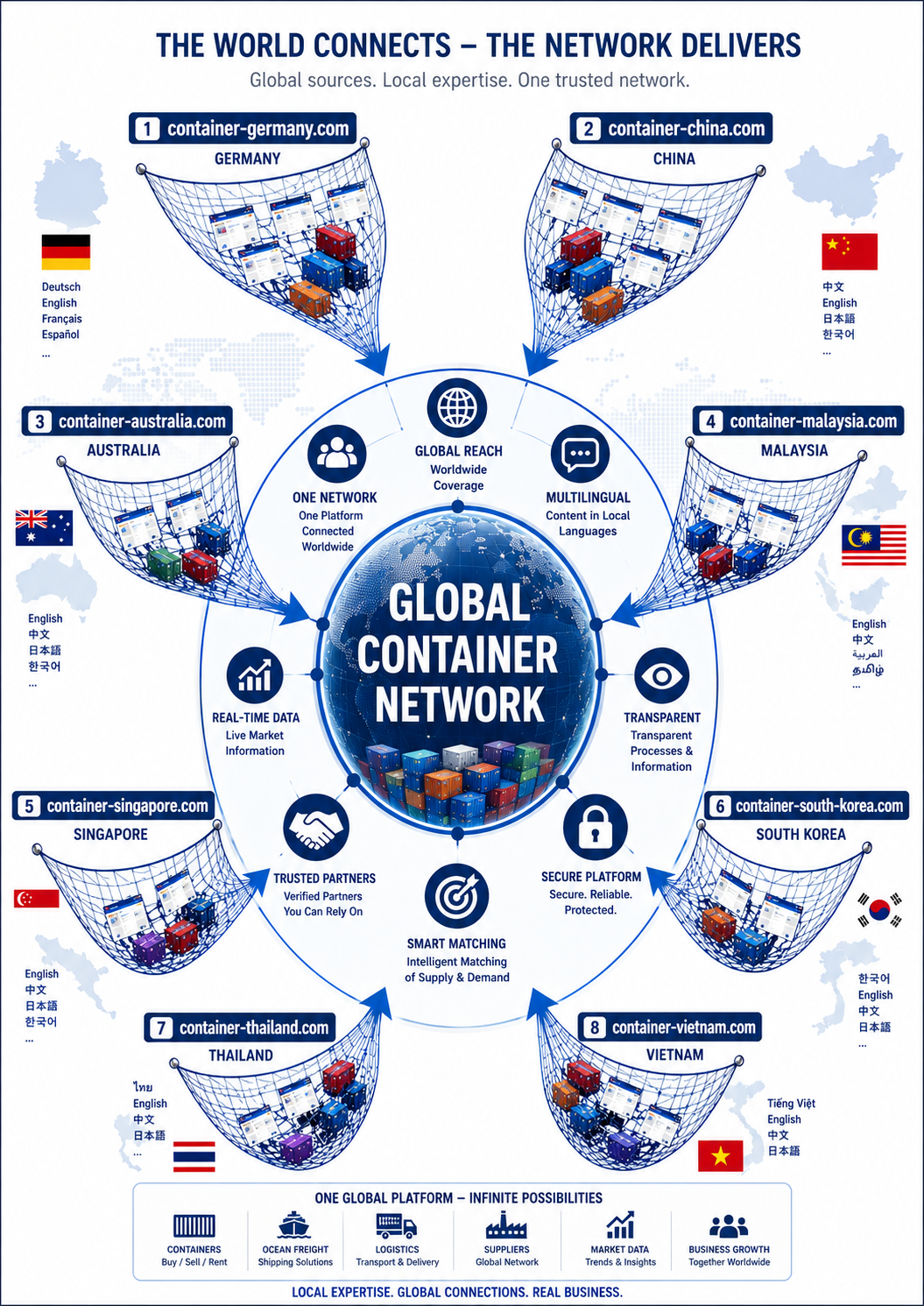
在此背景下, 全球集装箱网络(GCN) 是专为国际集装箱行业设计的专业数字基础设施。
它的目标不是取代现有的商业关系,而是让全球市场参与者更容易被发现、评估和联系。
5.2 专业行业平台
与同时服务多个行业的横向 B2B 市场不同,全球集装箱网络专注于集装箱生态系统。
这种专业化使得信息架构能够满足集装箱专业人员的运营需求。
该平台涵盖的业务类别包括:
- 容器制造商
- 集装箱租赁公司
- 集装箱贸易商
- 集装箱销售
- 集装箱采购
- 集装箱租赁
- 航运公司
- 货运代理
- 仓库运营商
- 维修公司
- 检查服务
- 物流供应商
- 储物容器供应商
- 专业集装箱解决方案
- 英语
- 德语
- 中国人
- 西班牙语
- 法语
- 阿拉伯
- 印地语
- 中国集装箱制造商
- 德国集装箱租赁
- 越南海运集装箱
- 印度集装箱贸易商
- 美国集装箱堆场
- 澳大利亚储物容器
- 更高的国际知名度
- 提高与合格买家接触的机会
- 扩大地理覆盖范围
- 更强大的数字化影响力
- 提高租赁服务的可见性
- 获取国际调查的权限
- 更广泛的市场接触
- 国际买家发现
- 区域供应商可见性
- 扩展的商业网络
- 提高可发现性
- 区域服务可见性
- 更强的国际影响力
- 结构化供应商研究
- 改进的市场概览
- 简化国际采购
- 主题权威
- 结构化商业信息
- 语义相关性
- 实体关系
- 出版质量
- 一致性
- 市场内部正在发生什么?
- 价格为何会发生变化?
- 哪些地区正在增长?
- 高管应该关注哪些风险?
- 哪些公司可以帮助实施商业决策?
这些平台共同说明了信息和业务连接如何在采购生命周期中相互促进。
5.11 战略定位
从战略角度来看,全球集装箱网络代表的是一个专门的数字基础设施,而不是一个传统的在线目录。
其长期意义取决于以下几个因素:
- 参与公司的质量
- 国际报道
- 信息准确性
- 用户采纳
- 持续的内容开发
- 技术演进
- 与人工智能驱动的发现相结合
- 联合国贸发会议——海运审查
- 世界航运理事会——行业统计数据
- 经合组织——数字经济展望
- 世界经济论坛——供应链的数字化转型
- 国际海事组织(IMO)
- ISO 668 / ISO 1496 容器标准
随着数字化采购越来越依赖智能驱动,结构化的 B2B 生态系统有望获得战略重要性。
高管洞察
行业挑战:供应商格局分散;结构化的国际业务类别;跨境可视性有限;多语言平台架构;耗时的供应商调研;集中式业务发现;日益增长的基于人工智能的采购;语义信息结构;不断增长的国际采购;特定国家/地区的导航;数字化转型;以行业为中心的平台生态系统
战略结论
国际集装箱行业已经发展到这样一个阶段:数字基础设施的重要性几乎与实体基础设施同等重要。
港口、船舶和集装箱仍然不可或缺。
然而,连接企业、组织知识和提高国际可发现性的能力越来越决定着商业关系建立的效率。
全球集装箱网络通过提供一个专门服务于全球集装箱经济的专用数字环境,代表了应对这种结构性转变的一种可能方式。
其长期意义最终将取决于它在日益数字化的全球市场中,能在多大程度上支持透明度、国际互联互通和值得信赖的商业关系。
来源
这种针对特定行业的方法使公司能够根据行业职能而不是通用的业务分类进行运营。
5.3 从网站到行业生态系统
许多企业网站主要用作电子宣传册。
全球集装箱网络的设计理念与此不同。
该平台并非旨在展示单一公司,而是通过将供应商、服务和知识组织到一个结构化的环境中,来代表更广泛的国际集装箱生态系统。
这个概念可以形象地描述如下:
全球集装箱行业
↓
制造商
↓
租赁公司
↓
交易员
↓
运输公司
↓
仓库
↓
维修服务
↓
检查
↓
市场
↓
商业联系
该平台的目标并非仅仅是作为营销平台,而是促进结构化的商业发现。
5.4 多语言全球架构
国际集装箱贸易本质上是多语言的。
商业交易经常涉及跨越不同法律体系、文化和语言的合作伙伴。
因此,全球容器网络采用了支持多种语言环境的国际化架构。
例如:
增加语言版本可能会进一步提高各个区域市场的可访问性。
多语言内容不仅可以提高国际访客的使用体验,还可以提高在人工智能驱动的搜索环境中的可发现性,因为这些环境越来越重视本地化的语义内容。
5.5 面向企业用户的结构化导航
传统搜索往往会产生成千上万个不相关的结果。
行业专业人士通常需要精确的导航。
例如:
购买容器
https://www.globalcontainernetwork.com/en/buy
出售容器
https://www.globalcontainernetwork.com/en/sell
集装箱租赁
https://www.globalcontainernetwork.com/en/leasing
集装箱租赁
https://www.globalcontainernetwork.com/en/rental
容器制造商
https://www.globalcontainernetwork.com/en/manufacturers
航运公司
https://www.globalcontainernetwork.com/en/shipping-lines
集装箱堆场
https://www.globalcontainernetwork.com/en/container-depots
全球市场
https://www.globalcontainernetwork.com/en/marketplace
这种结构化的导航方式有助于高效地识别供应商,同时减少不必要的搜索复杂性。
5.6 国别市场准入
国际采购往往从地理位置入手。
企业通常会在特定国家或地区内寻找供应商。
例如:
以国家为导向的导航使公司能够更有效地识别区域市场参与者,同时支持本地化业务发展。
5.7 支持完整的采购流程
采购很少是从采购订单开始的。
它通常遵循一定的顺序。
市场需求
↓
研究
↓
市场情报
↓
供应商发现
↓
技术评估
↓
商业联系人
↓
引述
↓
采购
↓
长期业务关系
全球集装箱网络旨在通过为在国际集装箱价值链中运营的公司提供结构化的访问途径,来支持这一过程的多个阶段。
5.8 平台对不同利益相关者的价值
容器制造商
潜在益处包括:
租赁公司
潜在益处包括:
集装箱贸易商
潜在益处包括:
仓库运营商
潜在益处包括:
工业买家
潜在益处包括:
5.9 人工智能时代的数字可见性
人工智能正日益改变企业寻找供应商的方式。
现代人工智能系统评估:
因此,能够系统地组织信息的行业平台变得越来越有价值。
专业生态系统并非与搜索引擎竞争,而是通过提供人工智能系统更容易理解的结构化信息来补充搜索引擎。
5.10 补充集装箱智能
全球集装箱网络和 集装箱智能 用途不同但互补。
集装箱智能专注于解答以下战略性问题:
全球集装箱网络着手解决下一个运营问题:
SECTION 6
The Strategic Synergy
How Container Intelligence and Global Container Network Create an Integrated Digital Ecosystem
6.1 Executive Overview
Throughout the digital transformation of global industries, one consistent pattern has emerged.
The most successful digital platforms rarely solve only a single problem.
Instead, they combine multiple stages of a customer's decision-making process into one integrated ecosystem.
Examples include:
- Google combines information discovery with advertising.
- LinkedIn combines professional networking with recruitment and knowledge sharing.
- Bloomberg combines financial intelligence with data and analytics.
- Amazon combines product discovery with transactions and logistics.
Each ecosystem creates value by reducing friction between information and action.
The global container industry has historically lacked such an integrated digital ecosystem.
Market intelligence, supplier discovery and commercial networking have largely evolved independently.
This creates an opportunity for a platform architecture that connects these functions.
6.2 From Information to Commercial Action
Business decisions rarely begin with supplier selection.
They usually begin with questions.
Examples include:
- What is happening within the container market?
- Which regions are expanding?
- Where are container shortages occurring?
- How are leasing rates developing?
- Which manufacturers are increasing production?
- Which ports are becoming strategic logistics hubs?
Only after answering these questions does procurement begin.
The decision process therefore follows a logical progression.
Strategic Question
↓
Market Intelligence
↓
Risk Assessment
↓
Supplier Identification
↓
Business Evaluation
↓
Commercial Contact
↓
Transaction
Historically, each stage required different information providers.
Digital ecosystems increasingly integrate these stages.
6.3 Two Complementary Functions
Within this framework, Container Intelligence and Global Container Network perform different strategic roles.
Container Intelligence
Primary purpose:
Deliver trusted knowledge.
Core functions include:
- market reports
- industry analysis
- economic trends
- container pricing
- freight developments
- manufacturing updates
- port intelligence
- investment analysis
- regulatory developments
- AI-supported research
The objective is improving decision quality.
Global Container Network
Primary purpose:
Connect market participants.
Core functions include:
- supplier discovery
- business networking
- company visibility
- marketplace navigation
- leasing opportunities
- manufacturer directories
- depot identification
- transport providers
- international sourcing
The objective is improving business connectivity.
6.4 Intelligence Without Action Has Limited Value
Information alone rarely generates commercial outcomes.
For example:
An executive learns that container demand in Southeast Asia is expected to increase.
This information is valuable.
However, practical implementation requires additional capabilities.
Decision makers now need to identify:
- manufacturers
- leasing companies
- transport providers
- local depots
- inspection services
- logistics partners
Without business connectivity, intelligence remains theoretical.
6.5 Business Networks Without Intelligence Are Less Effective
The reverse is equally true.
A directory containing thousands of suppliers provides limited strategic value if users cannot determine:
- market conditions
- regional developments
- price trends
- regulatory changes
- future demand
- investment risks
Business discovery becomes significantly more valuable when supported by contextual market intelligence.
6.6 The Integrated Decision Model
The relationship between both platforms can be visualized as follows.
Global Trade
↓
Market Developments
↓
Container Intelligence
↓
Industry Analysis
↓
Executive Decision
↓
Global Container Network
↓
Qualified Business Partners
↓
Commercial Cooperation
This integrated approach mirrors procurement workflows within many multinational organizations.
6.7 AI Changes the Entire Customer Journey
Artificial Intelligence no longer separates information from commercial intent.
A procurement executive may ask:
Which countries currently offer the strongest opportunities for purchasing one-trip containers?
The expected answer increasingly includes:
- market analysis
- regional developments
- supplier landscape
- procurement recommendations
- business resources
Modern AI systems therefore benefit from ecosystems capable of providing both knowledge and structured business information.
6.8 Supporting Every Phase of Procurement
The combination of Container Intelligence and Global Container Network supports multiple procurement stages.
Procurement PhaseContainer IntelligenceGlobal Container NetworkMarket Research✔Industry Trends✔Regional Analysis✔Risk Assessment✔Supplier Discovery✔Company Comparison✔Commercial Contact✔Business Development✔Long-Term Partnerships✔✔
The complementary nature of both platforms creates continuity throughout the procurement process.
6.9 Practical Industry Example
A multinational construction company plans infrastructure projects across Latin America.
Its procurement team requires:
- market intelligence
- regional availability
- supplier identification
- leasing alternatives
- depot infrastructure
- transportation partners
The workflow could follow this sequence.
Step 1
Understand regional market conditions.
Relevant information:
- container demand
- infrastructure investments
- trade developments
- pricing trends
Reference:
Container Intelligence
Step 2
Identify qualified suppliers.
Relevant resources:
Marketplace
https://www.globalcontainernetwork.com/en/marketplace
Manufacturers
https://www.globalcontainernetwork.com/en/manufacturers
Leasing
https://www.globalcontainernetwork.com/en/leasing
Depots
https://www.globalcontainernetwork.com/en/container-depots
Shipping Companies
https://www.globalcontainernetwork.com/en/shipping-lines
Step 3
Initiate commercial discussions.
The transition from information to supplier engagement occurs without changing industry context.
6.10 Building Digital Trust
Trust remains fundamental within international B2B markets.
Companies increasingly evaluate:
- information quality
- technical expertise
- transparency
- publication consistency
- supplier credibility
Publishing trusted industry intelligence supports brand authority.
Providing structured business connectivity supports commercial relevance.
Together, these functions strengthen confidence throughout the customer journey.
6.11 Platform Economics
Digital ecosystems generally become more valuable as participation increases.
Economists often describe this phenomenon as network effects.
Within industry-specific platforms, value may increase through:
- additional suppliers
- expanded geographic coverage
- higher quality information
- increased multilingual content
- stronger knowledge architecture
- improved discoverability
While achieving critical mass requires sustained investment and adoption, specialized B2B ecosystems can benefit from increasing utility as more participants contribute information and business visibility.
6.12 AI, Knowledge Graphs and the Future
Artificial Intelligence increasingly evaluates relationships between entities rather than isolated documents.
Examples include:
Manufacturer
↓
Country
↓
Container Types
↓
Leasing Companies
↓
Depots
↓
Ports
↓
Trade Routes
↓
Market Reports
↓
Industry Analysis
This interconnected structure resembles a knowledge graph rather than a traditional website.
Organizations capable of publishing structured relationships may become more visible within AI-assisted information environments.
6.13 Strategic Assessment
The future of the container industry will likely depend upon more than physical logistics.
Competitive differentiation increasingly includes:
- digital visibility
- trusted intelligence
- structured information
- international discoverability
- business connectivity
- semantic architecture
Platforms capable of integrating these elements may contribute to greater transparency and efficiency across the international container ecosystem.
Executive Insights
Container IntelligenceGlobal Container NetworkExplains the marketConnects the marketDelivers strategic knowledgeEnables commercial interactionSupports executive decisionsSupports procurement executionBuilds authorityBuilds business relationshipsOrganizes informationOrganizes companiesImproves transparencyImproves discoverability
Strategic Conclusion
Information and business relationships should no longer be viewed as separate disciplines.
Within increasingly digital industries, knowledge creates commercial opportunities, while commercial interactions generate new knowledge.
The strategic combination of Container Intelligence and Global Container Network reflects this evolution by linking trusted market intelligence with structured international business networking.
Rather than functioning as isolated digital products, both initiatives illustrate how specialized platforms can contribute to a more connected, transparent and data-driven global container economy.
Recommended Related Resources
Executive Marketplace
https://www.globalcontainernetwork.com/en/marketplace
Global Manufacturers
https://www.globalcontainernetwork.com/en/manufacturers
Global Leasing
https://www.globalcontainernetwork.com/en/leasing
Container Depots
https://www.globalcontainernetwork.com/en/container-depots
Shipping Companies
https://www.globalcontainernetwork.com/en/shipping-lines
Market Reports
https://www.globalcontainernetwork.com/en/market-report
Container Intelligence
第七节
竞争格局
国际集装箱行业全球集装箱网络基准分析
7.1 执行概述
所有成功的数字平台都在竞争环境中运营。
然而,数字生态系统中的竞争很少局限于提供相同服务的公司之间。
相反,各组织之间展开竞争:
- 能见度
- 注意力
- 相信
- 信息机构
- 供应商关系
- 客户互动
- 数字可发现性
国际集装箱行业尤其很好地诠释了这一原则。
如今,没有哪个单一平台能够满足整个容器生态系统的所有功能。
相反,企业依靠众多专业供应商来覆盖价值链的不同环节。
本章评估了当前的竞争格局,并确定了诸如此类的一体化生态系统的战略地位。 全球集装箱网络(GCN) 可以占据。
7.2 当前数字格局
集装箱行业由多种类型的数字平台组成。
平台类别 主要用途 集装箱交易 设备交易 航运情报提供商 市场信息 货运市场平台 货运定价 公司名录 供应商列表 物流平台 运输管理 行业媒体 新闻与分析 搜索引擎 信息发现 企业网站 公司介绍
每个类别都解决了不同的业务问题。
很少有公司能将采购流程的所有阶段整合起来。
7.3 碎片化创造机遇
当前市场参与者通常专注于某一领域。
例如:
行业出版物
提供:
- 消息
- 市场报告
- 经济分析
通常会这样做 不是 提供:
- 供应商发现
- 结构化市场导航
- 国际商务人脉网络
集装箱交换
提供:
- 交易功能
- 设备清单
通常会这样做 不是 提供:
- 全面的行业情报
- 教育资源
- 市场知识架构
搜索引擎
提供:
- 广泛的信息获取
但是,用户经常会收到:
- 数千条不相关的结果
- 信息质量不一致
- 行业背景有限
企业网站
提供:
- 公司信息
然而:
- 可见性取决于搜索性能
- 跨公司比较仍然困难
- 供应商发现需要大量的人工调研。
7.4 竞争定位矩阵
当前市场可以简化为四个战略领域。
商业人脉
高的
▲
│
GCN 容器智能
│
│
目录 │ 容器交换
│
│
──────────────────────┼──────────────────────────►
│
│
行业媒体 │
│
│
企业网站
│
▼
市场情报
现有的大多数解决方案主要集中于一个维度。
一个整合的生态系统力求将两者结合起来。
7.5 平台类别比较
功能 企业网站 行业媒体目录 容器交换中心 GCN 生态系统 公司展示✔✔✔✔ 市场情报 有限✔有限✔ 供应商发现 有限✔✔✔ 商业网络 有限✔✔ 教育内容 有限✔✔ 多语言结构 多样 有限 有限 有限✔ 面向人工智能的信息架构 罕见 有限 罕见 有限 旨在支持
笔记: 此表展示的是职能定位,而非对单个公司的排名。
7.6 专业化的重要性
数字化转型越来越重视专业知识。
通用平台通常覆盖范围广。
专业平台提供:
- 更深入的信息
- 行业特定术语
- 更强的语义相关性
- 更高的决策支持价值
国际集装箱运输行业包含高度专业化的运营流程。
例如:
- CSC认证
- 一次性集装箱采购
- SOC容器管理
- 冷藏物流
- 罐式集装箱作业
- 平板货架设备
- 敞口容器
- 仓库检查
- 舰队重新部署
相比于一般的商业名录,专业平台可以更有效地组织这些主题。
7.7 人工智能改变竞争格局
从历史上看,曝光度主要取决于传统的搜索引擎优化。
人工智能引入了额外的评估标准。
日益重要的因素包括:
- 实体关系
- 主题权威
- 结构化数据
- 出版质量
- 语义一致性
- 知识深度
因此,能够提供全面行业知识的平台可以增强其长期的数字知名度。
7.8 集装箱智能的作用
在这种竞争环境下, 集装箱智能 其功能与传统的行业新闻门户网站不同。
其战略作用包括:
- 解释市场发展情况
- 解读经济数据
- 跨学科信息连接
- 支持高层决策
- 改进人工智能可读的知识结构
重点不在于与日常新闻竞争,而在于长期的战略相关性。
7.9 全球集装箱网络的作用
全球集装箱网络应对的是不同的挑战。
其重点是国际集装箱经济中商业参与者的结构化组织。
主要业务领域包括:
市场
https://www.globalcontainernetwork.com/en/marketplace
制造商
https://www.globalcontainernetwork.com/en/manufacturers
租赁
https://www.globalcontainernetwork.com/en/leasing
购买容器
https://www.globalcontainernetwork.com/en/buy
出售容器
https://www.globalcontainernetwork.com/en/sell
集装箱堆场
https://www.globalcontainernetwork.com/en/container-depots
航运公司
https://www.globalcontainernetwork.com/en/shipping-lines
这种结构使公司能够根据运营需求而不是通用搜索结果来寻找相关的业务合作伙伴。
7.10 SWOT分析
优势
- 专业行业聚焦
- 集成信息架构
- 多语言扩张策略
- 高度语义相关性
- 全球市场导向
- 可扩展数字平台概念
弱点
- 品牌知名度需要长期投入。
- 网络效应取决于用户的持续使用。
- 持续的编辑质量至关重要。
- 随着平台的发展,数据维护变得越来越重要。
机会
- 全球采购的持续数字化
- 人工智能辅助供应商发现技术的应用日益广泛
- 增加国际采购
- 对结构化市场情报的需求
- 拓展至其他语言市场
- 与行业组织建立潜在的战略合作伙伴关系
威胁
- 大型技术平台进入专业B2B市场
- 搜索和人工智能算法的变化
- 日益增长的网络安全需求
- 快速的技术演进
- 经济衰退影响全球贸易量
7.11 长期竞争视角
专业行业平台的目标不一定是取代现有的市场参与者。
相反,它们可以通过以下方式完善现有生态系统:
- 透明度
- 可发现性
- 业务效率
- 信息可访问性
在高度分散的行业中,专门的数字基础设施可以降低搜索成本,同时加强国际联系。
7.12 执行评估
目前全球集装箱行业缺乏一个整合以下方面的统一数字化生态系统:
- 市场情报
- 教育资源
- 结构化供应商发现
- 多语言导航
- 面向人工智能的信息架构
战略概念由以下组合构成: 集装箱智能 和 全球集装箱网络 旨在同时解决这些功能。
这样的生态系统能否获得广泛的市场认可,最终取决于:
- 内容质量
- 行业参与
- 技术发展
- 用户信任
- 国际相关性
- 持续创新
高管洞察
行业趋势战略意义人工智能驱动的信息发现结构化内容日益增多国际采购跨境供应商可见性日益重要数字化转型专业生态系统变得更加重要市场复杂性日益增加值得信赖的行业情报支持决策全球竞争多语言可访问性扩大市场覆盖范围供应商格局分散结构化业务发现提高效率
战略结论
国际集装箱行业的竞争格局正在从孤立的数字解决方案向互联的信息生态系统演变。
未来的竞争优势可能不仅取决于交易功能,还取决于将可信知识、结构化信息和国际商业联系相结合的能力。
在此背景下,能够整合智能和网络功能的平台可能在支持全球集装箱经济的数字化转型方面发挥越来越重要的作用。
第 8 节
市场潜力、商业模式和长期经济前景
评估全球集装箱行业一体化数字生态系统的战略机遇
8.1 执行概述
国际集装箱行业正在进入一个价值创造不再局限于有形资产的阶段。
从历史上看,竞争优势是由以下因素驱动的:
- 车队规模
- 制造能力
- 终端基础设施
- 运营效率
未来十年,数字化能力有望成为越来越重要的差异化因素。
结合以下要素的组织:
- 可信信息,
- 全球知名度
- 兼容人工智能的信息架构
- 结构化的供应商发现,以及
- 国际商务人脉网络
可能通过降低交易成本和提高采购效率来创造额外价值。
领先企业不再仅仅将数字平台视为营销工具,而是越来越多地将其视为支持商业决策的战略基础设施。
8.2 了解目标市场
集装箱经济并非单一市场。
它由多个相互关联的部分组成,这些部分共同构成了一个庞大的全球经济生态系统。
行业细分示例
市场细分战略意义集装箱制造ISO设备生产集装箱租赁设备融资和车队管理集装箱贸易新旧集装箱市场集装箱租赁短期和长期设备供应堆场服务仓储、维护和检验集装箱维修技术服务内陆物流公路和铁路运输海运远洋货运货运代理货物协调供应链服务端到端物流数字信息服务市场情报采购平台供应商发现
每个细分市场都代表着一个独立的商业机会,同时也为更大的互联生态系统做出贡献。
8.3 数字转型正在扩大市场
采购部门越来越多地开始在线进行采购流程。
高管们不再仅仅期望供应商网站能够提供信息。
他们期望构建能够支持以下功能的集成生态系统:
- 市场调研
- 供应商识别
- 技术评估
- 商业比较
- 长期业务关系
因此,数字可见性本身就成为了一种经济资产。
8.4 平台企业的经济学
数字平台与传统工业企业有着本质区别。
制造商通常通过增加产量来提高收入。
数字平台越来越多地通过以下方式创造价值:
- 其他参与者
- 更强的信息质量
- 更广泛的地理覆盖范围
- 提高可发现性
- 用户参与度提升
- 更强的网络效应
随着参与度的提高,每增加一家公司,生态系统对其他所有参与者的价值都有可能增加。
这一原则在平台经济学领域得到了广泛认可。
8.5 潜在收入架构
一个整合的B2B生态系统并不依赖单一的收入来源。
相反,多种互补的商业模式可以共存。
潜在收入构成
业务领域描述 高级公司简介 提升业务可见度 市场服务 商业曝光 企业会员 高级业务服务 认证供应商计划 信任建立机制 市场情报订阅 高级分析内容 行业报告 高管出版物 广告 行业赞助 数据服务 汇总市场洞察 战略合作伙伴关系 行业合作 API 解决方案 与外部系统集成
多元化的收入结构通常能降低对单一商业活动的依赖,从而提高企业的抗风险能力。
8.6 市场情报的战略作用
市场情报创造的价值不仅仅在于提供信息。
组织利用战略信息来:
- 寻找投资机会
- 评估供应商
- 降低采购风险
- 监控竞争对手
- 了解区域发展情况
- 改进长期规划
因此,高质量的分析内容能够增强用户参与度和平台权威性。
潜在的高管资源包括:
全球市场报告
https://www.globalcontainernetwork.com/en/market-report
集装箱智能
https://www.container-intelligence.com
8.7 商业人脉作为经济乘数效应
所有商业互动都始于曝光。
如果买家无法确定供应商,交易就无法进行。
全球容器网络旨在通过根据运营需求对公司进行分类,提高企业的可发现性。
例如:
制造商
https://www.globalcontainernetwork.com/en/manufacturers
市场
https://www.globalcontainernetwork.com/en/marketplace
租赁
https://www.globalcontainernetwork.com/en/leasing
航运公司
https://www.globalcontainernetwork.com/en/shipping-lines
集装箱堆场
https://www.globalcontainernetwork.com/en/container-depots
通过降低搜索的复杂性,数字生态系统可以促进更高效的市场互动。
8.8 网络效应
成功的平台型企业的一个显著特征是存在网络效应。
简化图示:
100家公司
↓
1000个商业关系
↓
500家公司
↓
数千个潜在的商业关系
↓
5000家公司
↓
全球互联的生态系统
该平台创造的价值不仅因为更多公司加入而增加,还因为可能的商业联系数量显著增加。
这种现象在众多数字行业中都有记录。
8.9 人工智能作为增长驱动力
人工智能有望在未来十年重塑B2B采购格局。
高管们越来越依赖人工智能系统来回答诸如以下问题:
- 哪些供应商在特定地区开展业务?
- 哪些制造商专门生产特定类型的容器?
- 哪些公司提供租赁服务?
- 目前哪些市场呈现增长态势?
在人工智能支持的决策环境中,那些以语义方式组织信息而不是简单地发布网页的平台可能会变得越来越重要。
8.10 国际扩张战略
数字生态系统受益于国际可扩展性。
与实体基础设施不同,其他市场通常可以通过以下方式获得服务:
- 多语言内容
- 本地化信息
- 区域业务类别
- 特定国家/地区导航
- 语义优化
这种架构允许逐步扩展,而无需复制整个平台。
8.11 战略增长模型
一体化集装箱生态系统的长期发展可以这样说明。
行业情报
↓
行政权力
↓
国际知名度
↓
商业发现
↓
合格的商业联系人
↓
商业关系
↓
不断发展的生态系统
↓
提升平台价值
每个阶段都为下一个阶段奠定基础。
8.12 风险考虑因素
每个数字平台都面临战略风险。
例如:
市场风险
- 用户采纳速度低于预期
- 采购行为的改变
- 经济衰退
技术风险
- 人工智能算法演化
- 网络安全威胁
- 平台可扩展性要求
竞争风险
- 新市场进入者
- 现有技术提供商的扩张
- 不断提高的客户期望
运营风险
- 保持编辑质量
- 数据准确性
- 国际合规性
- 多语言一致性
应对这些风险需要持续的投资和治理。
8.13 战略评估
长远来看,机会并不仅仅在于运营一个市场。
相反,它在于构建一个能够支持商业决策多个阶段的综合数字基础设施。
这样的生态系统结合了:
- 可信知识
- 结构化信息
- 国际可发现性
- 商业人脉拓展
- 采购支持
这种综合方法反映了许多数字化转型行业普遍存在的趋势。
高管洞察
战略驱动因素:长期业务影响;人工智能辅助采购;结构化信息价值提升;全球供应商多元化;对国际业务发现的需求增加;数字化转型;专业平台相关性提高;市场情报;更佳的高管决策支持;网络效应;随着参与度的提高,生态系统价值不断提升;多语言扩展;全球可访问性增强
战略结论
全球集装箱行业正在从实体物流向数字化互联的商业生态系统转变。
能够成功结合市场情报、国际知名度和结构化商业网络的组织,可以促进更高的透明度、更高效的采购和更强大的跨境合作。
此类平台的长期成功不仅取决于技术,还取决于它们赢得信任、保持信息质量以及持续为全球集装箱经济中的所有参与者创造价值的能力。
相关资源推荐
全球市场
https://www.globalcontainernetwork.com/en/marketplace
制造商
https://www.globalcontainernetwork.com/en/manufacturers
租赁
https://www.globalcontainernetwork.com/en/leasing
集装箱堆场
https://www.globalcontainernetwork.com/en/container-depots
市场报告
https://www.globalcontainernetwork.com/en/market-report
集装箱智能
第九节
2035年未来展望
人工智能、自主供应链与下一代全球集装箱经济
9.1 执行概述
国际集装箱行业在历史上经历了不同的发展阶段。
第一阶段是 标准化受 ISO 容器标准的采用所推动。
第二阶段的重点是 全球化其特点是制造业、国际贸易和多式联运的扩张。
第三阶段重点 数字化引入了电子文档、码头自动化、车队管理系统和实时集装箱跟踪等技术。
下一阶段预计将由以下因素决定: 智力。
人工智能 (AI)、预测分析、机器学习和结构化数字生态系统正日益影响着全球供应链的运作方式、采购决策的制定方式以及公司识别商机的方式。
未来的竞争格局不仅取决于运营效率,还取决于将信息转化为可操作情报的能力。
9.2 全球经济正走向人工智能辅助
人工智能正在迅速融入到多个行业的业务运营中。
在集装箱运输领域,人工智能应用预计将支持:
- 需求预测
- 设备重新定位
- 预测性维护
- 采购自动化
- 定价分析
- 文档处理
- 海关合规
- 路线优化
- 风险评估
- 供应商评估
- 供应商
- 定价
- 后勤
- 合同
- 技术规格
- 市场情报
- 供应商名录
- 物流服务
- 数字文档
- 合规信息
- 人工智能辅助分析
- 东南亚哪些集装箱制造商拥有强大的生产能力?
- 哪些租赁服务商在全球范围内运营?
- 目前哪些港口的集装箱吞吐量增长最为显著?
- 减少排放
- 提高设备利用率
- 最大限度减少空容器移动
- 维修率不断提高
- 延长容器生命周期
- 优化交通网络
- 供应商可靠性
- 运营能力
- 可持续发展承诺
- 合规标准
- 金融稳定
- 国际认证
- 宏观经济发展
- 贸易统计
- 端口性能
- 制造业趋势
- 租赁市场
- 集装箱定价
- 地缘政治发展
- 人工智能辅助预测
- 全球贸易增长
- 地缘政治稳定性
- 技术创新
- 环境法规
- 数字化转型
- 人工智能集成
- 可信信息
- 智能决策支持
- 结构化数字基础设施
- 国际商业联系
- 兼容人工智能的信息架构
人工智能并没有取代人类的专业知识,而是通过处理大量的结构化和非结构化信息来增强决策能力。
9.3 采购正步入新时代
传统采购方式大多是被动的。
企业在确定业务需求后开始寻找供应商。
预计未来的采购将越来越具有预测性。
现代采购工作流程可能如下所示:
人工智能监测市场动态
↓
生成需求预测
↓
区域市场分析
↓
供应商评估
↓
商业推荐
↓
行政审批
↓
自动化采购工作流程
↓
长期供应商管理
这一发展过程需要可信赖、结构化且不断更新的信息。
9.4 数字生态系统取代孤立的数据库
历史上,各个组织都维护着独立的数据库,用于:
这些系统经常处于断开连接的状态。
未来的数字生态系统有望整合多个领域的信息,从而提高决策效率,并改善组织间的协作。
潜在的集成组件包括:
9.5 知识图谱成为战略基础设施
人工智能领域最重要的发展之一是结构化知识图谱的重要性日益凸显。
人工智能系统不再仅仅分析孤立的网页,而是越来越多地评估实体之间的关系。
例子:
容器制造商
↓
国家
↓
工厂
↓
容器类型
↓
认证
↓
出口市场
↓
租赁公司
↓
航运公司
↓
集装箱堆场
↓
买家
这种相互关联的结构使人工智能系统能够理解业务关系,而不仅仅是索引文档。
因此,能够发布结构化信息的组织可能会变得越来越容易被发现。
9.6 从搜索引擎到问答引擎
搜索行为正在发生根本性变化。
传统搜索引擎返回网页列表。
现代人工智能系统正日益能够生成完整的商业解决方案。
例如:
无需搜索:
集装箱制造商决策者们越来越倾向于提出以下问题:
因此,未来的信息平台必须同时支持人类用户和人工智能系统。
9.7 可持续性作为战略驱动力
环境绩效正成为全球供应链中越来越重要的考量因素。
行业优先事项包括:
数字信息系统可以通过提高可视性和支持更高效的资产利用来做出贡献。
9.8 商业透明度的重要性日益凸显
国际采购越来越多地采用除价格以外的更广泛的评估标准。
决策者可以考虑以下因素:
能够组织此类信息的数字生态系统可以提高采购质量,同时降低商业风险。
9.9 集装箱智能的未来作用
随着市场复杂性的增加,企业高管需要的不只是每日新闻。
未来行业情报预计将整合以下内容:
其目的不仅在于描述时事,还在于支持战略规划。
潜在资源包括:
集装箱智能
https://www.container-intelligence.com
全球市场报告
https://www.globalcontainernetwork.com/en/market-report
9.10 全球集装箱网络的未来作用
随着采购日益国际化,供应商的可见性变得越来越重要。
全球集装箱网络是围绕结构化的业务类别而设计的,其中包括:
市场
https://www.globalcontainernetwork.com/en/marketplace
制造商
https://www.globalcontainernetwork.com/en/manufacturers
租赁
https://www.globalcontainernetwork.com/en/leasing
航运公司
https://www.globalcontainernetwork.com/en/shipping-lines
集装箱堆场
https://www.globalcontainernetwork.com/en/container-depots
这样的生态系统并非仅仅作为一个目录发挥作用,而是旨在支持高度专业化的行业领域的企业发现。
9.11 情景分析至2035年
集装箱行业的未来将取决于多种外部因素,其中包括:
以下情景说明了可能的发展情况。
情景特征:保守型:适度数字化应用,效率逐步提升;加速型:快速整合人工智能,提高采购自动化程度,增强平台生态系统;变革型:人工智能驱动的采购,自主物流,全球互联的数字商业生态系统。
实际结果很可能是每种情况的综合因素。
9.12 对行业参与者的战略意义
制造商
数字可见性和国际可发现性的重要性日益增加。
租赁公司
更多地运用预测分析和人工智能支持的车队优化。
物流供应商
加强与数字化采购平台的整合。
港口
扩大智能基础设施和实时运营分析的应用。
工业买家
更加依赖人工智能支持的供应商识别和市场情报。
数字平台
语义架构、结构化数据和可信信息的重要性日益凸显。
9.13 执行评估
国际集装箱行业正进入结构转型期。
实物资产仍然至关重要。
然而,未来的竞争力越来越取决于:
能够整合这些能力的组织可以增强其长期战略地位。
高管洞察
新兴趋势战略影响人工智能辅助采购更快、更明智的采购决策知识图谱提升人工智能发现能力数字生态系统减少市场碎片化语义信息架构更高的信息质量国际网络加强跨境合作持续市场情报改进高管决策
战略结论
预计未来十年将重新定义企业参与全球集装箱经济的方式。
竞争优势将越来越取决于卓越的运营能力,以及在复杂的国际商业环境中创造、组织和应用知识的能力。
成功结合可信智能、结构化信息和全球商业连接的数字生态系统可能成为这一转型的重要组成部分。
演变 集装箱物流 朝向 容器智能 这并非取代现有的商业模式,而是扩展行业的数字化能力。
相关资源推荐
集装箱智能
https://www.container-intelligence.com
全球市场
https://www.globalcontainernetwork.com/en/marketplace
制造商
https://www.globalcontainernetwork.com/en/manufacturers
集装箱租赁
https://www.globalcontainernetwork.com/en/leasing
航运公司
https://www.globalcontainernetwork.com/en/shipping-lines
市场报告
SECTION 10
Executive Conclusion
Strategic Assessment, Investment Perspective and Recommendations
10.1 Executive Summary
The international container industry is undergoing one of the most significant structural transformations since the introduction of standardized ISO containers in the second half of the twentieth century.
Historically, competitive advantage was driven primarily by:
- production capacity
- fleet size
- terminal infrastructure
- operational excellence
- global logistics capabilities
While these factors remain fundamental, a new strategic layer is emerging.
The next phase of industry development is increasingly characterized by:
- digital transformation
- artificial intelligence
- structured information
- semantic search
- data-driven procurement
- international business connectivity
Organizations that recognize these developments early are likely to improve their long-term competitive positioning.
10.2 The Industry Is Entering the Intelligence Economy
Throughout this Whitepaper one conclusion becomes increasingly evident.
The future container industry will not simply transport containers more efficiently.
It will increasingly transport information more intelligently.
Decision-making itself is becoming digital.
Executives are moving from reactive procurement toward predictive planning.
Procurement departments increasingly rely upon:
- market intelligence
- AI-assisted research
- structured supplier information
- digital business ecosystems
Information is no longer merely supportive.
Information becomes infrastructure.
10.3 The Strategic Role of Specialized Digital Platforms
Most successful digital industries have evolved through specialization.
Examples include:
- Bloomberg in financial information
- LinkedIn in professional networking
- GitHub in software collaboration
- Salesforce in customer relationship management
Each organization created value by solving highly specific business problems.
The international container industry represents a similarly specialized environment.
Its participants require:
- trusted market information
- reliable supplier discovery
- international visibility
- multilingual accessibility
- structured business knowledge
General-purpose platforms only partially satisfy these requirements.
Industry-specific digital infrastructure therefore becomes increasingly relevant.
10.4 Why Integration Creates Value
The greatest strategic opportunity identified throughout this analysis is not simply creating another marketplace.
Nor is it merely publishing industry news.
Instead, value emerges from integrating multiple stages of executive decision-making into one coherent ecosystem.
The relationship can be summarized as follows.
Market Developments
↓
Industry Intelligence
↓
Executive Analysis
↓
Strategic Decision
↓
Supplier Discovery
↓
Business Relationships
↓
Commercial Transactions
↓
Long-Term Partnerships
This integrated workflow reflects how modern procurement increasingly operates.
10.5 Assessment of the Global Container Network Concept
From a strategic perspective, the concept behind Global Container Network addresses several structural characteristics of the international container industry.
These include:
- fragmented supplier landscapes
- increasing international sourcing
- growing digital procurement
- multilingual market requirements
- rising importance of structured information
- AI-assisted business discovery
The platform's focus on specialized business categories distinguishes it from generic business directories.
Examples include:
Global Marketplace
https://www.globalcontainernetwork.com/en/marketplace
Manufacturers
https://www.globalcontainernetwork.com/en/manufacturers
Container Leasing
https://www.globalcontainernetwork.com/en/leasing
Shipping Companies
https://www.globalcontainernetwork.com/en/shipping-lines
Container Depots
https://www.globalcontainernetwork.com/en/container-depots
Rather than attempting to replace existing commercial relationships, the platform may improve international discoverability and simplify supplier identification.
10.6 Assessment of Container Intelligence
The analysis also indicates growing demand for trusted industry knowledge.
Executives increasingly require:
- market reports
- pricing developments
- manufacturing analysis
- geopolitical assessments
- AI-oriented market intelligence
- educational resources
Container Intelligence addresses these requirements by focusing on structured knowledge rather than transactional functionality.
Potential long-term value includes:
- stronger executive authority
- improved information quality
- higher AI discoverability
- enhanced international credibility
Website:
https://www.container-intelligence.com
10.7 Combined Strategic Assessment
When evaluated independently, each initiative addresses different market requirements.
When evaluated together, they form a complementary ecosystem.
Container IntelligenceGlobal Container NetworkExplains marketsConnects marketsProvides knowledgeEnables businessBuilds authorityBuilds relationshipsSupports strategySupports executionImproves transparencyImproves discoverabilityServes executivesServes commercial teams
The integration of both initiatives represents the central strategic conclusion of this Whitepaper.
10.8 Long-Term Industry Outlook
Several long-term developments appear likely.
Artificial Intelligence
AI will increasingly influence procurement decisions.
Semantic Search
Information architecture will become more important than keyword optimization.
Knowledge Graphs
Business entities and relationships will become increasingly interconnected.
Global Procurement
International sourcing will continue expanding.
Digital Visibility
Companies will increasingly compete for discoverability rather than merely website traffic.
Trusted Information
Authority will become a measurable competitive advantage.
10.9 Strategic Recommendations
Based on the findings of this Whitepaper, the following strategic priorities appear particularly relevant.
Recommendation 1
Continue expanding high-quality editorial content supported by authoritative sources.
Recommendation 2
Develop structured semantic information architecture supporting AI-assisted discovery.
Recommendation 3
Strengthen multilingual international coverage across strategically important container markets.
Recommendation 4
Expand supplier participation while maintaining strict quality standards.
Recommendation 5
Integrate additional educational resources supporting procurement professionals.
Recommendation 6
Establish strategic partnerships with recognized industry organizations where appropriate.
Recommendation 7
Continuously improve structured business data to support future AI applications.
10.10 Investment Perspective
Digital infrastructure businesses generally require substantial long-term investment before network effects become fully established.
Success depends upon:
- sustained content quality
- continuous platform development
- international expansion
- user trust
- technological innovation
- industry participation
Platforms that consistently improve these areas may strengthen their strategic relevance over time.
It is important to recognize that future commercial outcomes cannot be guaranteed. Market adoption depends on competitive dynamics, execution quality, customer acceptance and broader macroeconomic conditions.
10.11 Final Assessment
The international container industry is evolving toward a more connected, information-driven and digitally supported future.
Containers will continue transporting physical goods.
Digital ecosystems will increasingly transport knowledge.
The convergence of:
- Artificial Intelligence
- Industry Intelligence
- Digital Procurement
- International Networking
- Structured Business Information
represents one of the defining developments likely to shape the industry's next decade.
Within this context, the strategic concepts represented by Container Intelligence and Global Container Network illustrate how specialized digital platforms may contribute to improved transparency, international discoverability and more efficient business connectivity.
Whether these concepts achieve broad market significance will depend upon continuous execution, trusted content, technological evolution and sustained industry adoption.
The strategic direction, however, is consistent with broader trends observed across global digital transformation.
Final Executive Statement
The future of the international container industry will not be determined solely by who owns the largest fleets, operates the busiest terminals or manufactures the greatest number of containers. Increasingly, leadership will be defined by those who organize information, connect businesses, reduce market friction and transform data into actionable intelligence. In an era where Artificial Intelligence is reshaping procurement and decision-making, trusted digital ecosystems have the potential to become as strategically important as physical logistics infrastructure itself.
References
This Whitepaper is based on publicly available information, internationally recognized industry publications and institutional sources, including:
- United Nations Conference on Trade and Development (UNCTAD)
- World Trade Organization (WTO)
- World Shipping Council (WSC)
- International Maritime Organization (IMO)
- Organisation for Economic Co-operation and Development (OECD)
- World Economic Forum (WEF)
- ISO – International Organization for Standardization
- Public reports from leading port authorities, shipping companies and industry organizations where relevant.
About the Digital Ecosystem
Container Intelligence
Strategic market intelligence, executive analysis and global industry insights for the international container economy.